Mindful Design #22
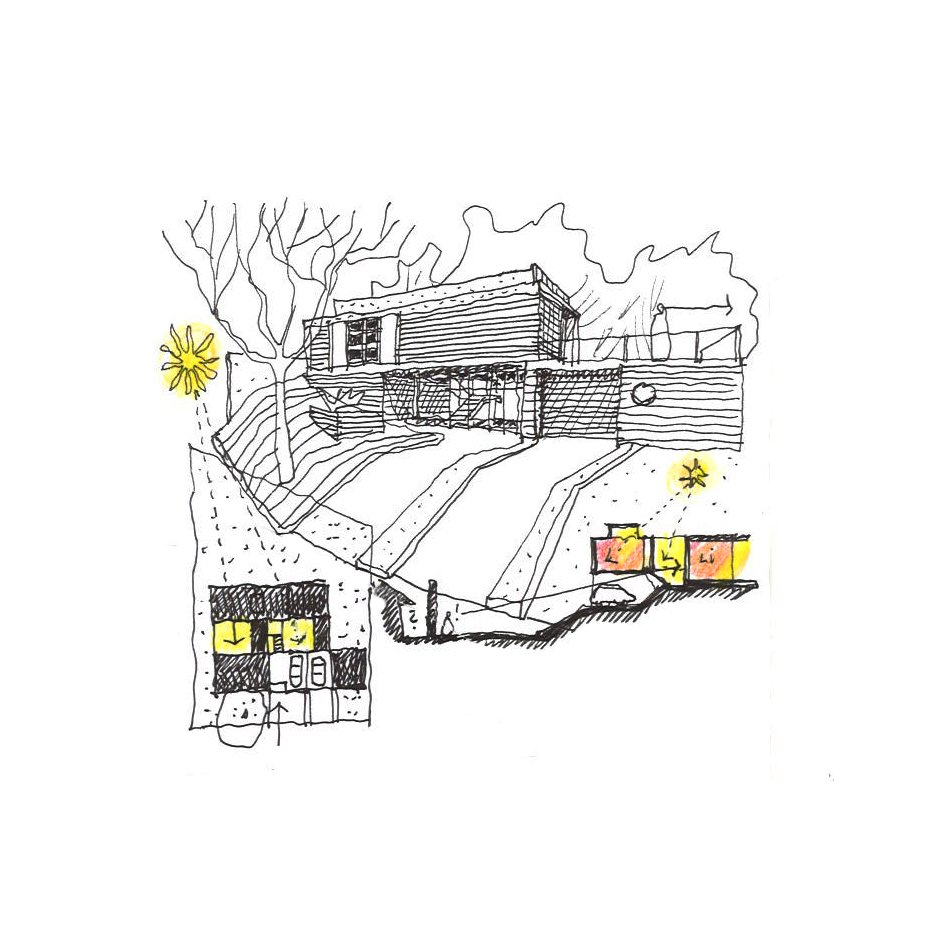
Sketch by: Thorsten Deckler
Welcome to the Mindful Design Newsletter #22, in which we share with you a house that speaks of quiet luxury unmatched in most contemporary architecture.
Bonus: Find out how a top athlete practices mindfulness – you’ll be surprised!
Every week I see money spent on building projects in ways that make me want to lie down in a darkened room and cry a little: expensive tiles that will look embarrassing by 2030, boundary walls that cost a small fortune and make properties look like detention facilities, lighting that stresses rather than soothes, homes that shout so loudly "look at me" that living in them would feel like squatting in a showroom.
In this issue, I want to look at the opposite: a house built in 1961 that still works better than what gets built today.
A brief case study:
House Levitan, designed by Ronnie Levitan for his brother, remains radical to this day. Radical not because it is particularly beautiful or structurally daring, but because of what it does. For starters, the house has no boundary wall; instead, one encounters an inviting atrium and an elegant set of stairs leading to the front door.
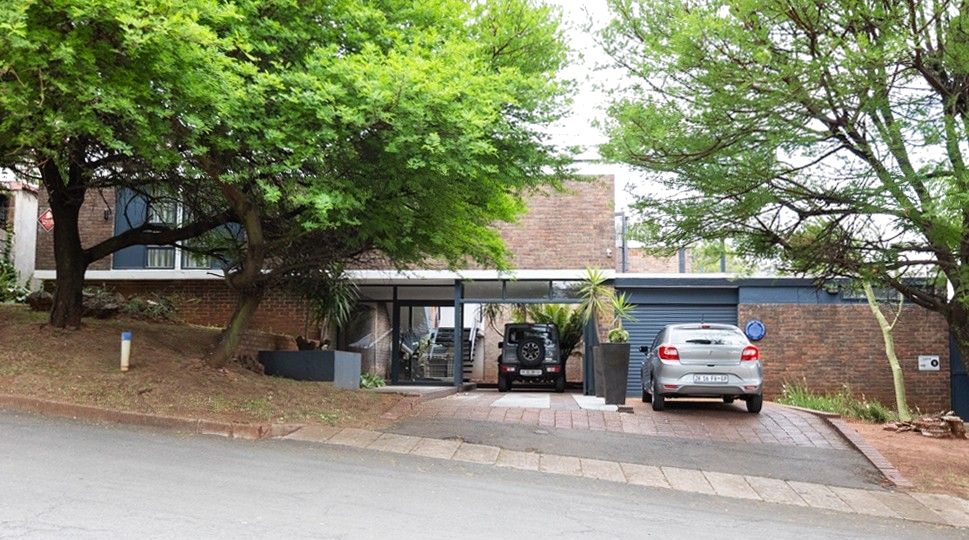
House Levitan, situated in one of Johannesburg’s older neighbourhoods, uses the slope of the site to create an entrance atrium. Image by Heather Mason
The absence of a wall is breathtaking in a city where millions are spent on boundary walls, each uglier than the next. Mark, the owner of this house, has experienced no crime since he moved in 8 years ago. Yet, all around, people insist on building walls ever higher - a wilful act of self-harm - despite the well-established fact that walls offer perfect cover for criminal activity, render streets inhospitable and dead, and make whole suburbs less safe.
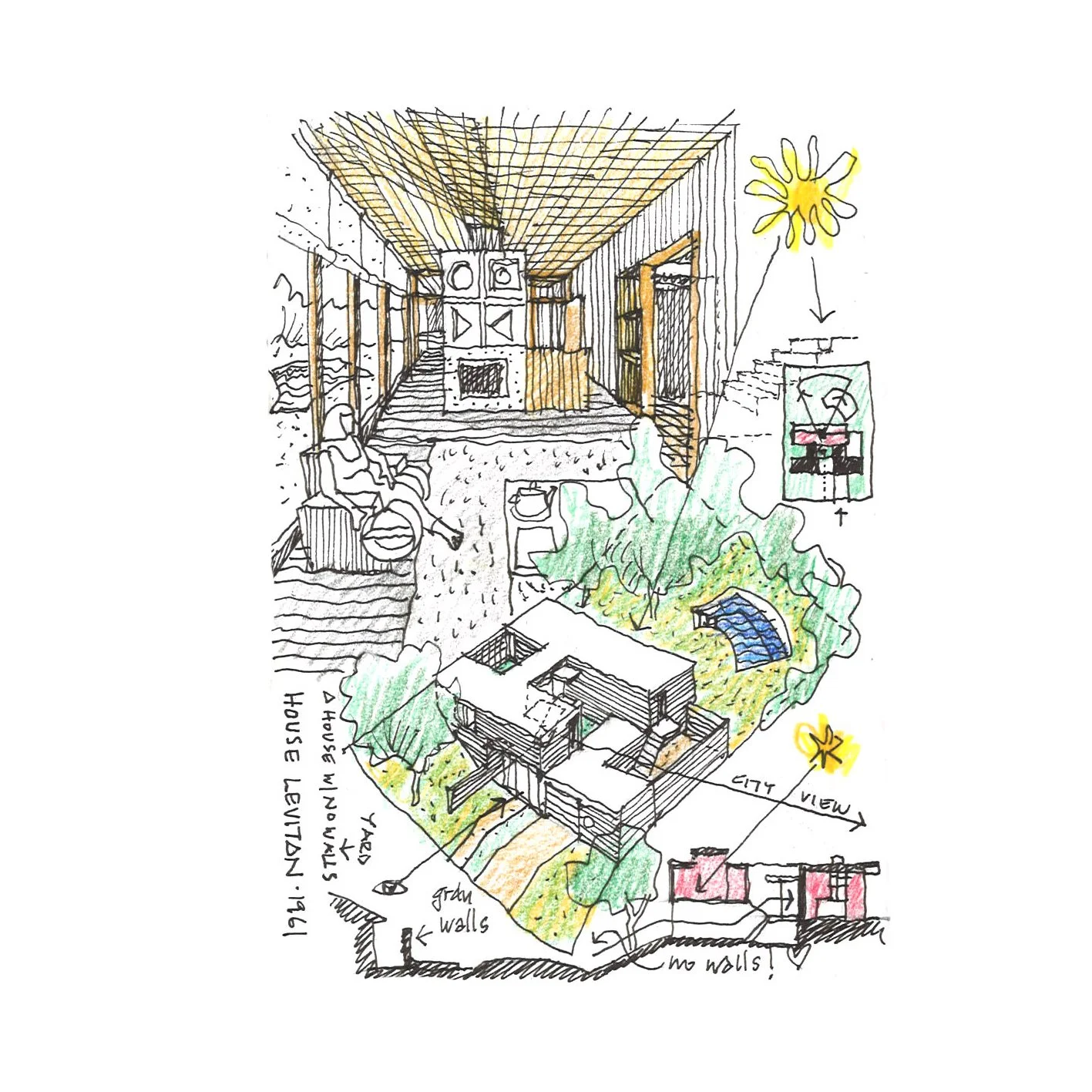
Composite Sketch by Thorsten Deckler showing the H-shaped volume that allows north light into all spaces
The open aspect of this house is not the only innovation. Northern sunlight enters every room, even the bathrooms. Getting sun into a house is a special form of bliss in Johannesburg, where winters are bracingly cold but sunny. Yet so many poorly oriented houses are colder inside than outside. Obviously, this house saves on heating costs, but it also offers something bigger in how it tracks the passing of the day and the seasons, tethering the ordinary business of living to something as vast as the cosmos. Besides, the sun sends no invoice.
Inside, the house uses simple, robust materials that have lasted several decades and still look good: quarry tiles on the floors, whitewashed cement block walls, and pine ceilings that still carry a faint smell of the wood. The details are not decorative; they are practical. Just like the small window and light fitting in the study, positioned to illuminate the working surface for a right-handed person.
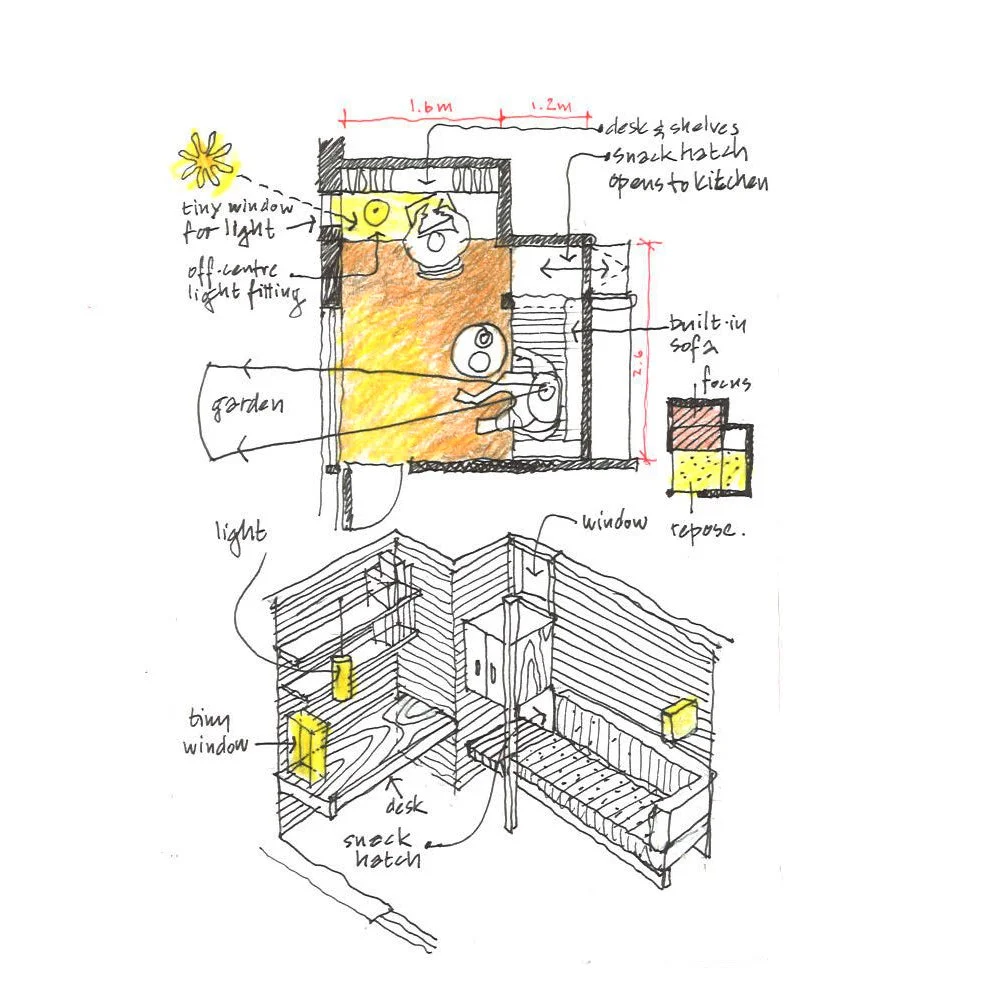
Sketch of the study, a space less than ten square meters in size, but allowing for both focused work and repose. It can even double as a 4th bedroom. Image by Thorsten Deckler
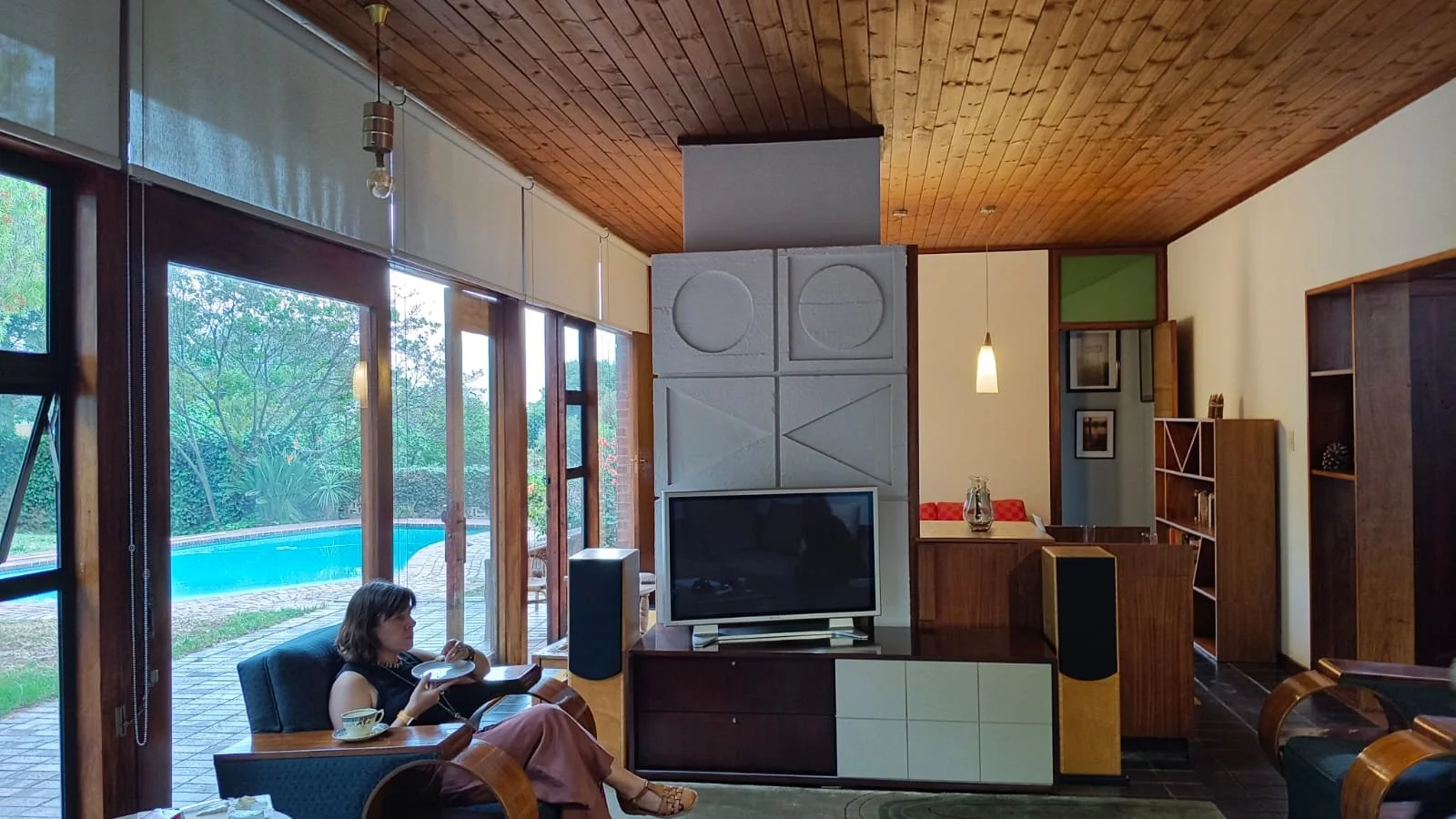
Living room and dining room are divided by a double-sided fireplace, with the timber ceiling oriented to connect both spaces. Image by Thorsten Deckler
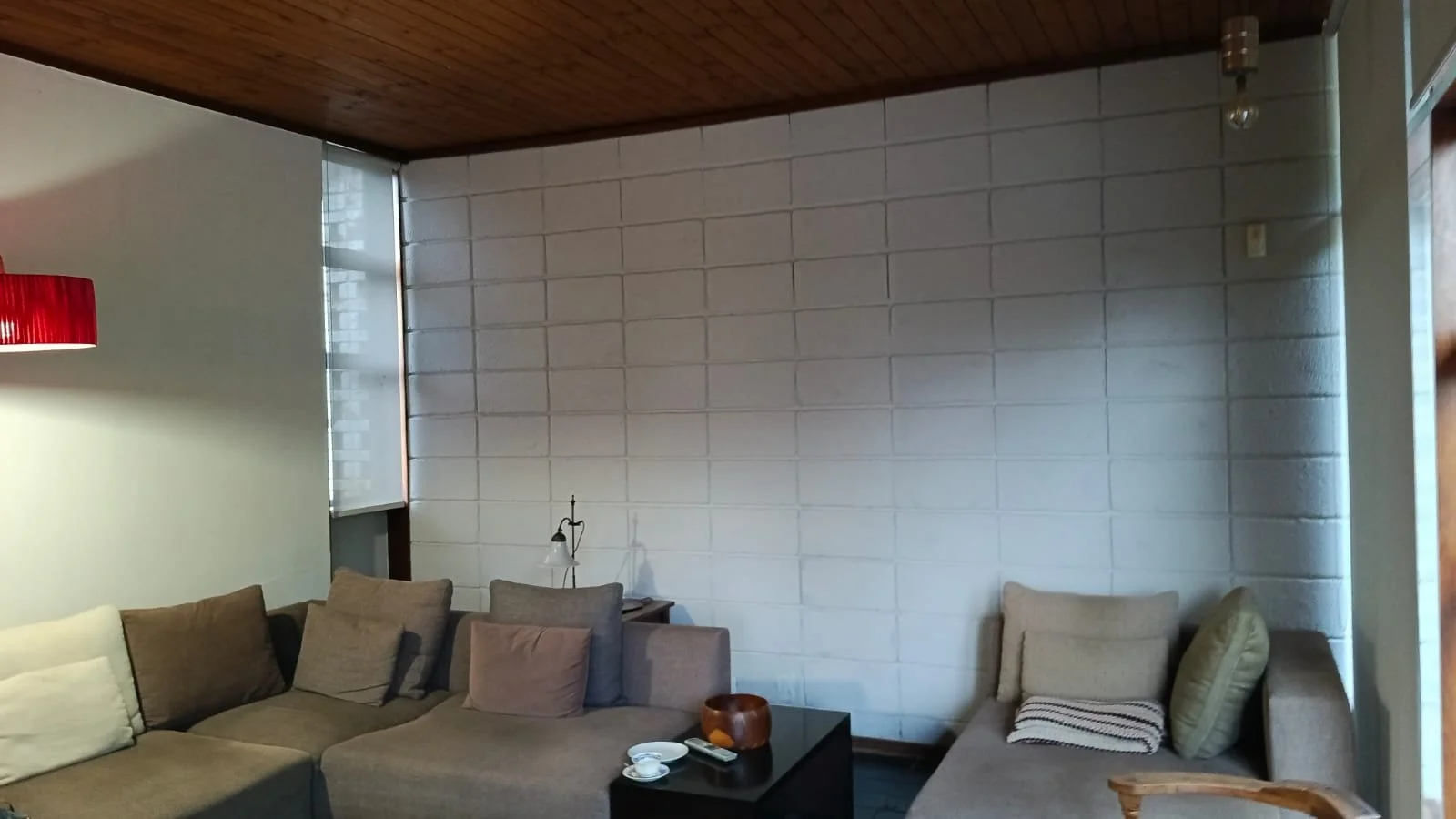
A tall, narrow window lights an otherwise dark corner of the lounge, highlighting ordinary white-painted cement blocks. Image by Thorsten Deckler.
Nothing about this house is frivolous, and in the hands of a thoughtful architect, the details come together in a calm, yet thrilling way.
During my visit, Mark spoke about his house with genuine love and enthusiasm, pointing out details that I mention only a few of here. Glossy magazines won't come knocking. There are no chandeliers, metres of LED strip lighting, or slabs of engineered stone. The house is a reminder that designing from first principles produces something less pretentious, longer-lasting, and more genuinely luxurious. In House Levitan, we encounter luxury as a problem well solved. A quiet kind of luxury that offers comfort and choice, meeting human needs elegantly, whilst saving money on unnecessary trappings we have come to associate with luxury.
On the way to the house, we stopped at one of the leading tile shops, looking for the classic 150×150 Johnson tiles - in continuous production for 75 years - only to discover they were being phased out. Asking after quarry tiles, once standard for floors, skirtings, sills, and copings, drew only bafflement from the sales staff. Instead, we were surrounded by a glut of trendy tiles that will date within five to ten years. In the light of House Levitan, these products seem like expensive, ineffective plasters that inflame, rather than heal, the lack of substance in contemporary architecture.
Most building projects don’t achieve the level of refinement of House Levitan because people rush into design without spending time understanding the challenges and opportunities. Whether you're thinking of a new build or a renovation, we have a process to help you navigate the building journey and avoid a nightmare. It's not a miracle solution, but a calm, structured process that helps you make informed decisions.
You can find out more about the Mindful Design Approach here.
You can also book a free 30-minute Expert Call with us here to find out the best way to start your project.
Or book an on-site strategy session here
We look forward to meeting you.
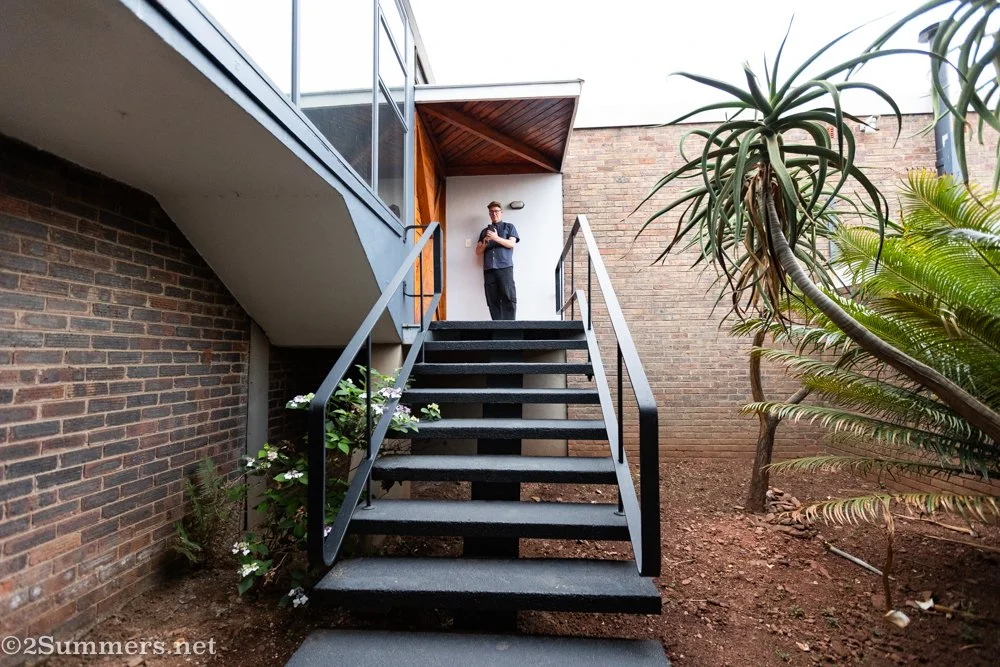
Entrance atrium of House Levitan, image by Heather Mason
That’s me above, doing what I love most: drawing to help me understand the world, especially how things, like buildings, work. You can see more sketches on Instagram @thethinking_hand. The account has grown into an archive of ideas, experiences, details, and stories about architecture, cities, and landscapes. Making these drawings helps me slow down and find beauty in this crazy world. I hope they inspire you to do the same.

Image: thenation.com
BTW: Do you know who else sketches? San Antonio Spurs superstar basketballer Victor Wembanyama. Drawing is his way of mentally recharging on his off-days, when he can decompress, lower stress levels, and centre his energy before high-stakes games. See, drawing is not about ‘getting it right’ but about being in the moment.
Give it a go.
Love Thorsten.